Discovering Antiques the Story of World Antique History Arts

If you lot've always taken an art history class or spent time in a fine arts museum, chances are you know a lot about the men who "defined" their mediums. Every bit with other subjects, virtually of what we learn well-nigh art history today notwithstanding centers on white men from Europe and, subsequently, the United States. In reality, there are so many more than artists of all genders to learn from and appreciate.
Here, we're specifically taking a look at just some of the women who have had lasting impacts on their art forms. From some of the art earth's most iconic pioneers to its most unsung heroes, these women artists all had a mitt — and, in some cases, still take a paw — in changing the world of art and how we define it.
Laura Wheeler Waring

Laura Wheeler Waring was an artist and educator who taught at Cheyney University in Pennsylvania for more than than 30 years. After studying the piece of work of painters like Cézanne and Monet while away, she returned to the United States, becoming best known for her portraits of prominent Blackness Americans, many of which were painted during the Harlem Renaissance.
Cindy Sherman

Photographer Cindy Sherman was part of the Pictures Generation during the 1980s, and is perchance most well known for her series of Untitled Film Stills (1977–eighty) — self-portraits in which Sherman "posed in the guises of various generic female film characters, among them, ingénue, working girl, vamp, and lonely housewife" (via MoMA). In this series, and those that followed, Sherman used photography to question the media's influence over our individual and collective identities.
Yoko Ono

You might first think of Yoko Ono every bit a musician and activist, but she'southward as well an achieved functioning and conceptual creative person. Ono was considered a pioneer in the operation art motion, earning the nickname the "High Priestess of the Happening".
Ane of her almost revered works, Cut Piece, was a performance she first staged in Nippon; Ono sat on stage in a nice suit and placed pair of scissors in front of her, and, in an deed of daring vulnerability, invited audience members to come on stage and cut away pieces of her clothing. "Art is similar breathing for me," Ono has said. "If I don't practice information technology, I kickoff to asphyxiate."
Betye Saar
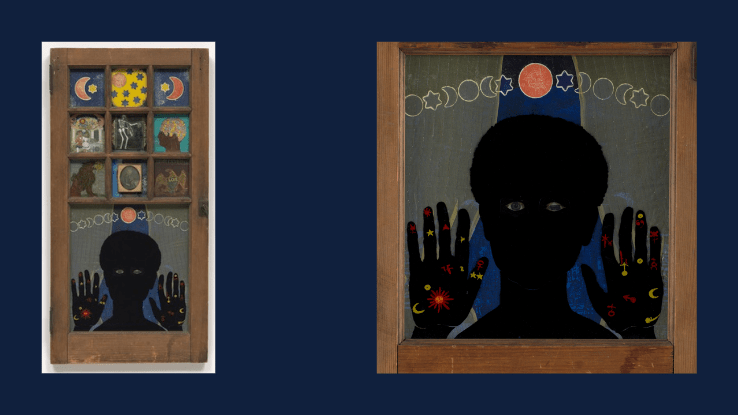
Earlier becoming a printmaker and activist, Betye Saar studied design and was employed equally a social worker. A printmaking constituent inverse her entire career trajectory — and, in turn, office of the trajectory of art history.
Saar was role of the Black Arts Movement in the 1970s and, through painting and assemblage, critiqued institutionalized racism and the racist stereotypes white people held toward Blackness Americans. "To me the trick is to seduce the viewer," Saar has said. "If you tin can get the viewer to await at a work of fine art, then y'all might be able to give them some sort of bulletin."
Frida Kahlo

It's rare to observe someone who hasn't at to the lowest degree heard of Frida Kahlo. A self-taught painter from Mexico, she is best known for exploring themes like death and identity through her self-portraits. Kahlo often used bold, bright colors to create her symbol-rich works, and was regarded equally 1 of the virtually influential artists of the Surrealist motility.
Yayoi Kusama
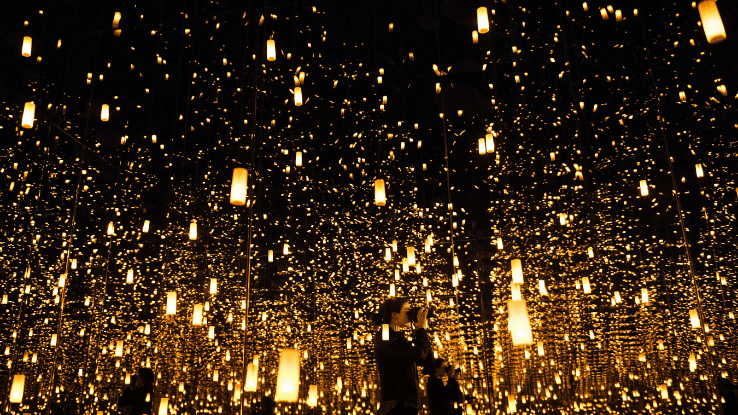
Yayoi Kusama started painting at a very immature age, only she'due south also known for her hyper-real sculptures, polka dots, installations, and and so much more than. Like many of her peers, Kusama embraced the counterculture of the 1960s, employing nudity in much of her piece of work. Today, she continues to create works for her indelible Mirror/Infinity rooms series, which employ mirrors and lit objects to create a sense of endlessness.
Amy Sherald

Amy Sherald is an American painter and portraitist who depicts Black Americans, often doing everyday activities — something that became more common in portraiture writ big in the mid-19th century. Odds are that you lot recognize Sherald's work — and her signature grayscale skin tones — every bit she was the first Black woman to complete a presidential portrait for the Smithsonian's National Portrait Gallery.
Georgia O'Keeffe

Known every bit the mother of American modernism, you likely associate Georgia O'Keeffe with her paintings of New United mexican states's landscapes, flowers, skulls, and, but perhaps, the skyscrapers of New York Metropolis. In the 1920s, she was the first adult female painter to gain the respect of the New York art world, all by painting in her unique mode.
Adrian Piper

Adrian Piper became a pioneering minimalist, feminist, and conceptual creative person in 1970s New York City. She used her work to question society, identity, and racial politics by enervating the audition to confront truths about themselves. She often challenged people on the streets of New York to guess her race, socio-economic class, and gender — all while dressed as a Blackness man with a fake mustache and sunglasses, or while wearing compelling statements on her wearing apparel.
Shirin Neshat
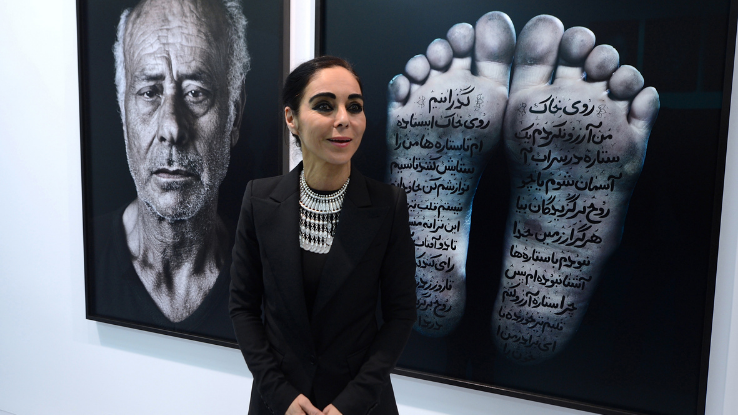
Shirin Neshat left Iran in 1974 to written report fine art in Los Angeles, California — before the Iran Islamic Revolution took place. She is best known for her photography, film, and video piece of work, much of which explores the relationship between Islam's cultural and religious systems and women. Moreover, Neshat'southward works oftentimes create a sense of solidarity and empowerment.
Jenny Holzer

As a neo-conceptual artist, Jenny Holzer'southward work focuses on words and ideas, which she puts on advertising billboards, projects onto buildings and adds to electronic displays or neon signs.
These works display phrases that act as meditations on various concepts, such every bit trauma, knowledge, and hope. Ane of her more notable works, I Smell Yous On My Skin, makes the viewer question what kind of sentiment the sentence conveys.
Rebecca Belmore

Much of Rebecca Belmore's fine art addresses identity and history — and, in particular, houselessness and the voicelessness of the First Nations People in Canada. As an Anishinaabekwe artist, she works to enhance awareness around the prejudice, violence, and attempted erasure of Indigenous North American culture. In 2005, she was the first Indigenous woman to represent Canada at the Venice Biennale.
Louise Bourgeois
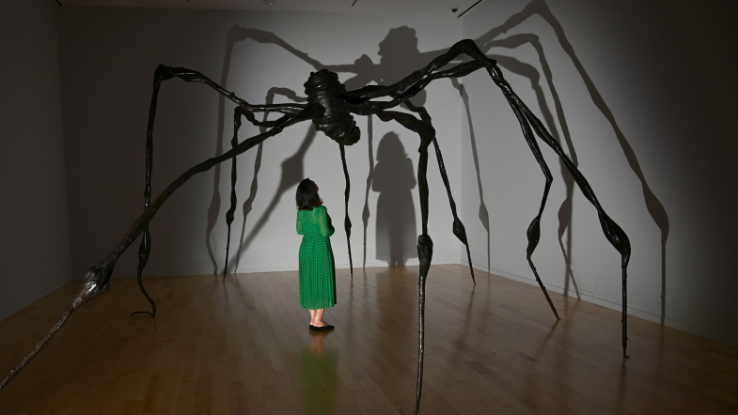
While a prolific printmaker and painter, Louise Bourgeois is ameliorate known for her installation art and sculptures — like the spider above — which were inspired by her own experiences and memories. Throughout her career, she created revolutionary works during a time when brainchild and conceptual art were the primary styles shaping the fine art world.
Mickalene Thomas

Heavily influenced by pop civilisation and pop art, Mickalene Thomas often embellishes her paintings with rhinestones and uses colorful acrylic paints. In her work, Thomas centers Black American women, whom she believes embody power and femininity.
Judy Chicago

Judy Chicago was one of the major figures within the early Feminist Art movement. As exemplified in her iconic work The Dinner Party, her installation pieces often examine the role of women in history and civilization — in the 1970s and before. While at California State Academy in Fresno, Chicago founded the first feminist art programme in the United States.
Augusta Vicious

Augusta Savage was an American sculptor during the Harlem Renaissance who worked toward securing equal rights for Black Americans in the arts. In addition to creating breathtaking sculptures, often of Blackness folks, Fell founded the Savage Studio of Arts and Crafts in Harlem in 1932, and, a few years later, she became the first Blackness American elected to the National Association of Women Painters and Sculptors in 1934.
Carolee Schneemann

Known for her provocative functioning art practices, Carolee Schneemann is considered the progenitor of "torso art". (Just await up her most famous work, Interior Scroll, and you'll see what we mean.) She used her body to examine women's sensuality and liberation from the oppressive aesthetic and social conventions established by our patriarchal lodge.
Nan Goldin

Famous for her in-the-moment photography, Nan Goldin's work challenges traditional power relations. In improver to documenting New York City'south queer subculture post-Stonewall, Goldin explored the HIV/AIDS crisis, opioid epidemic, and LGBTQ+ bodies.
Elaine Sturtevant

Does this look similar an Andy Warhol to you? Well, that's the idea! Elaine Sturtevant, who went by her last name professionally, was a conceptual artist known for her inexact replicas — that is, not-quite-right copies of big-name artists' work.
Some artists and critics encouraged her efforts, while others became quite aroused. Nonetheless, Sturtevant used her works to explore the concepts of authorship, originality, and the structure of art culture.
Ruth Asawa
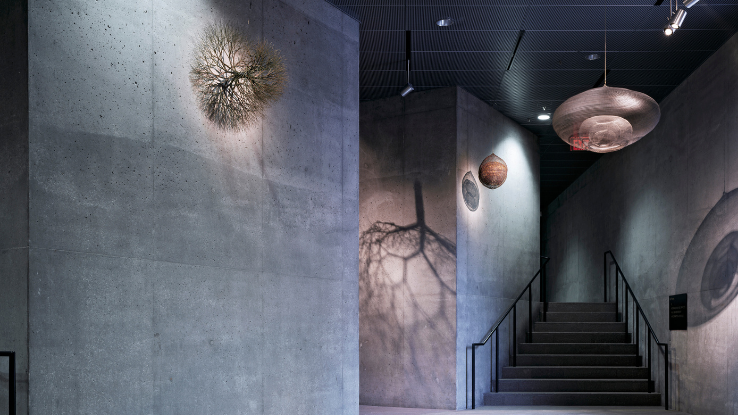
During the 1960s, Ruth Asawa created increasingly complex wire sculptures. A San Francisco-based artist, Asawa's last public commission was the Garden of Remembrance at San Francisco State University, which was created to recognize Japanese Americans who were interned during World War II.
Catherine Opie
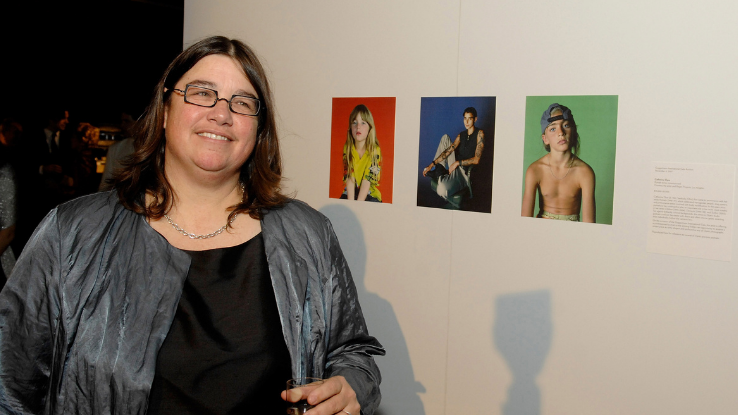
Known for her studio, portrait, and landscape photography, Catherine Opie has been a lensman since the age of nine. She uses her photography to examine social norms, and, in doing and then, displays various subcultures in formal portraits — but in a style that conveys power and respect by evoking traditional Renaissance portraiture.
micha cárdenas

micha cárdenas is an artist, author, theorist, and assistant professor who won an Touch on Award at the Indiecade Festival in 2020 and the Creative Award from the Gender Justice League in 2016. She believes pedagogy is the path to liberation and uses VR and art to address global problems such every bit racism, gendered violence, and climatic change.
Lee Krasner

Lee Krasner was an Abstract Expressionist painter who as well specialized in collaging. Her works capture a spirit of relentless reinvention, from her Cubist drawings and assemblage to her portraits and murals for the Works Progress Administration (WPA).
vickersduchou1963.blogspot.com
Source: https://www.ask.com/culture/women-who-changed-world-of-fine-art?utm_content=params%3Ao%3D740004%26ad%3DdirN%26qo%3DserpIndex
0 Response to "Discovering Antiques the Story of World Antique History Arts"
Post a Comment